
Wipers judder when the blade edge sticks to the glass instead of gliding. The three usual causes are a dirty or waxy windscreen, rubber that has hardened in the heat, and a wiper arm that no longer holds the blade at the right angle. Clean the glass and the blade edge first; if the judder stays, replace the blades, and if new blades still judder, have the arm checked.

What is judder?
A wiper blade is meant to flip over at each end of its sweep and then slide across the glass on a thin film of water, with the edge trailing at a slight angle. Judder (also called chatter) is when the edge grips the glass instead: it sticks, jumps, sticks again, and you hear and feel it shudder across the screen. It also leaves bands of water behind, which is the real problem in a downpour.

What causes it?
| Cause | How to tell | Fix |
|---|---|---|
| Film on the windscreen: car-wash wax, tree sap, road grime | Judder even with new blades; the screen looks smeary at night | Clean the glass thoroughly with a glass cleaner, then rinse |
| Dirty blade edge | Judder plus streaks | Wipe the rubber edge with a damp cloth |
| Rubber hardened by heat and sun | Edge looks shiny, feels hard, or is cracked | Replace both blades |
| Blade has taken a “set” from being parked in one position | Judders in one direction of the sweep only | Replace the blade |
| Wiper arm twisted or pressure too low | New blades on a clean screen still judder; blade doesn’t sit flat on the glass | Workshop: check and adjust the arm |
| Wrong blade or adapter for the arm | Blade wobbles in the arm, or the adapter needed forcing | Check the size and adapter for your car |
| Too little water on the glass | Only judders in light drizzle | Use the intermittent setting |
Start at the top. Most judder is a dirty screen or old rubber, and both are quick to fix.
How do you clean the screen properly?
- Wash the windscreen with a proper glass cleaner, not just the washer jets. Pay attention to the area where the blades rest.
- Wipe each blade’s rubber edge with a damp cloth until the cloth comes away clean.
- Top up the washer bottle with windscreen washer fluid rather than plain water, which leaves a film over time.
- If the car was just waxed, check whether wax got onto the glass. A wax film is the classic cause of judder on a new blade.

When should you replace the blades?
Replace both blades if the rubber is hard, shiny, cracked or torn, or if they still judder or streak after the screen and edges are clean. Heat and sun age the rubber even when the wipers are hardly used, so in Malaysia a blade can look fine and still wipe badly. Replace driver and passenger blades together; they age at the same rate.
What does silicone change?
DuraFit makes two wiper lines:
| Silent | Hydrophobic | |
|---|---|---|
| Blade material | AA-grade natural rubber | Silicone |
| Coating | PTFE coating | Hydrophobic coating |
| Best for | Everyday quiet wiping | Heavy rain and highway driving |
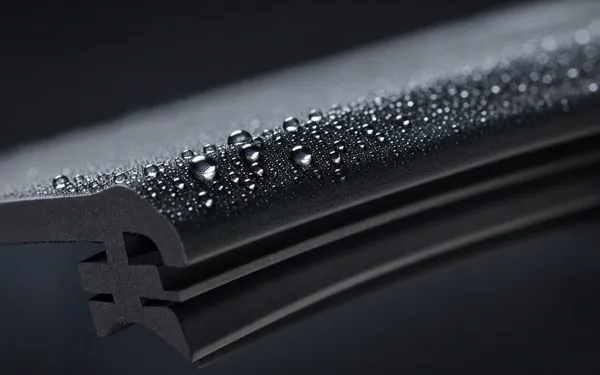
The Silent blade uses natural rubber with a PTFE coating, which helps the edge slide quietly across the glass. The Hydrophobic blade is silicone with a hydrophobic coating that beads water off the screen, so rain runs off instead of spreading into a sheet. That helps most in heavy monsoon rain and at highway speeds.

A new blade of either kind won’t fix judder caused by a waxed windscreen or a twisted arm. Sort those first; then the right blade does its job.
Getting the size right
Driver and passenger blades are usually different lengths, and wiper arms end in different fittings. Look up your car in the wiper size finder for both lengths and the adapter type, or see DuraFit wiper blades for the full range. Not sure about your arm? Send a photo of the arm end to the ServAuto BD team on WhatsApp.
Frequently asked questions
Why do new wiper blades judder?
Do wipers judder more on light drizzle?
What is the difference between DuraFit Silent and Hydrophobic blades?
How do I find the right wiper size?
Need wiper blades?
Sources
- Your vehicle's owner's manual (wiper operation and blade replacement).
- DuraFit wiper blade line specifications: Silent and Hydrophobic (durafit.my/products/wiper-blades).
- DuraFit wiper fitment data (ServAuto fitment records), durafit.my/wiper-size-finder.


